

A room full of Auckland's sharpest HR and people leaders were asked a simple question at the Hacking HR NZ chapter launch: Who actually owns your development?
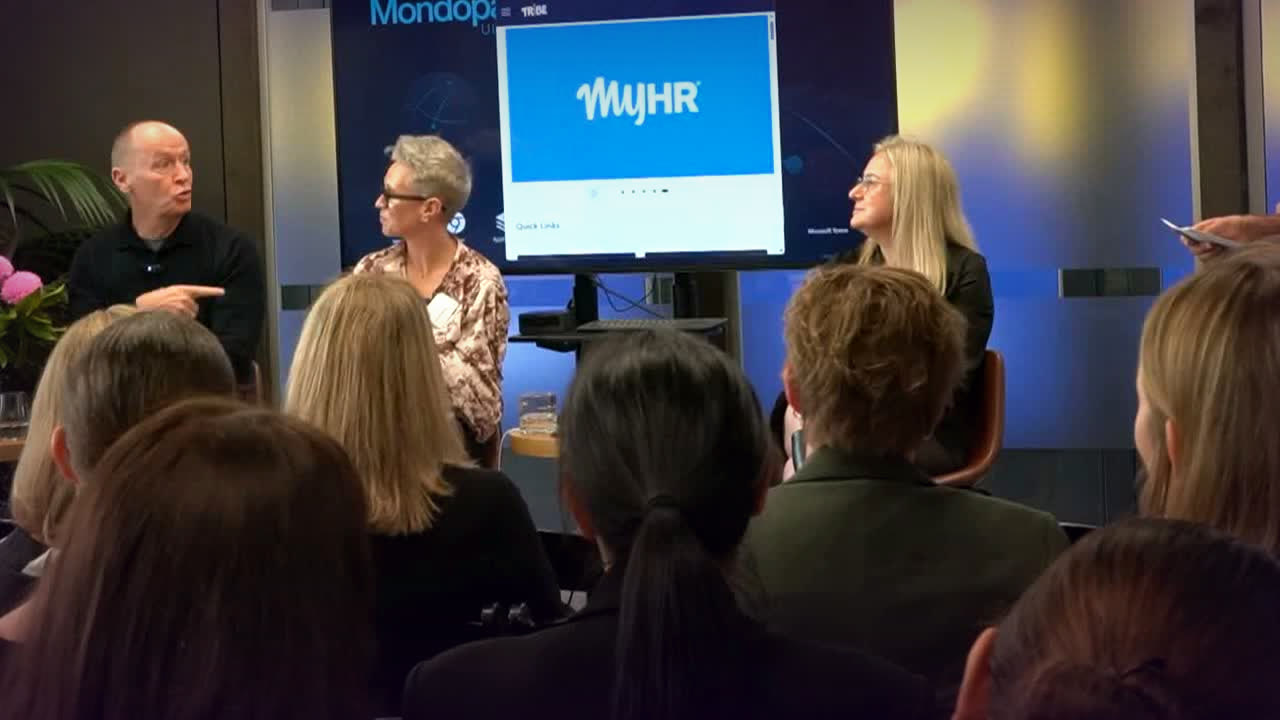
At the Hacking HR NZ chapter launch, a room full of Auckland's sharpest HR and people leaders got a simple question: who actually owns your development? The answer used to be easy. HR ran the programs, managers ran the 1:1s, everyone else waited their turn. A former CEO, a CFO, an HR leader and an executive coach spent forty minutes taking that apart.
Executive coach Russell Eastwood put a number on the thing most people rarely say out loud. "The top 5% get these beautiful executive coaches that get three and a half grand thrown at them. The next 15% go on a leadership course. Then there's the rest of them, and they get a workshop and a quick chat with their manager."
Alex Howieson made it worse. Even the few who get a coach usually get one because something has already gone wrong. "We're not really talking about, 'Oh, Alex is amazing. Let's give her $3,500 because she's so amazing, to make her more amazing.' "
So the top 5% get rescued. Everyone else gets a workshop. Asked beforehand to name their biggest challenge, more registrants chose "managers are too stretched to coach" than anything else.
Howieson has run the leadership program that everyone attends and nothing comes of it. What went missing was everything meant to happen afterwards: the language on every agenda, the behaviors practiced out loud. "They never landed those sort of 10 things to shift the dial." At Qantas she'd seen it done properly, one idea pushed through 5,000 people until everyone could name it.
Mike Bennetts hit the same wall from the other side, and his example is worse: the training was good. Z Energy put half the company through three days on human-centred design, then launched a digital product. Marketing came to him demanding he kill it. The innovation team came to him delighted.
"Marketing heard complaint. The innovation team heard feedback. It was the same thing."
Same content, opposite reactions. "There are conditions that impact development that have got nothing to do with the development program."
Which is why eRoad CFO Ciara McGuigan struggles with large training budgets, "because you don't ever really see the outcome or the benefit." Moderator Serge van Dam went further. Most talent leaves because of a manager, and by his count fewer than 44% of managers have had any training in how to manage. Gallup's global workplace research puts the number in the same place. "If we're gonna spend a million bucks this year, the first million should go to teaching our managers to be managers."
Van Dam had opened with the easy one: the most impactful development experience early in your career.
Eastwood named his first boss, selling real estate in the UK. "He just took me everywhere with him. He had faith in me to give everything a nudge. He'd certainly give me feedback when I needed it, which was pretty often."
Howieson named the Qantas boss who moved her into industrial relations at 26. She was mid-strike, working seven days a week and complaining about it. He told her the unions weren't holding themselves accountable, then turned it around. "And neither are you." He watched her career for the next ten years.
McGuigan named the coach she was sent to at Vodafone after she hit the wall, expecting sympathy. What she got was a question. "What are you avoiding in your life that you keep working so hard?"
Bennetts named the international development program his employer sent him on. Twelve people, three days, four observers. He did well. Thirty years later what stuck was the discomfort. "I still carry the scars today. It shifted a lot of things for me, and not always in a positive way."
Three named a person. The fourth named a program, and what he remembers is the four people watching him, not the content. What developed all four was someone paying close attention and telling them the truth.
So why do so few people get that kind of attention? The panel put it down to nerve.
Bennetts went first, on himself. "I like to be liked. That's a serious thing for me, and that made me a great CEO and a really bad CEO, because I would not deal with certain things." Eastwood put it in Kiwi terms. "They're shy of holding people to account. They don't want to upset each other. We are too, too kind." Howieson's fix was four words. "Clarity is kind to you."
Then Bennetts sharpened it. "Are you really being kind when you don't give people quality feedback to improve their performance, where you deny someone the chance to fulfill upon their potential?"
The last question was about technology, and all four had an answer ready. Howieson wanted "accessibility and scale. Everybody having a go." McGuigan wanted it used on the go rather than off site for two hours, without becoming an expense line nobody can explain in six months. Bennetts wanted consistency. "Not just scale, but it can actually be system-wide in how you do things."
Bennetts also runs an AI coach on himself. "My AI's instruction when it critiques my performance after every coaching session is, 'Do not be kind.' And it's doing a fantastic job of following the instruction." That's the courage problem, solved by taking out the person who has to be brave.
Eastwood went last, from the coach's chair. Huckleberry partnered on the event, worth saying before what came next. He tries to coach his wife. She isn't interested. She has, however, been listening through the wall.
"She'll hear through the wall me getting coached by a Huckleberry. They'll listen to the technology. There's a lot that gets in the way of a human coach, even if we're having a really good day. There is an amazing opportunity for that honest, pure coaching from technology."
Nearly all of the people leaders who registered had already said development is a priority. The gap was never conviction. It was that the thing which actually develops people, someone paying close, honest attention over time, has never scaled past the few who could afford it. That's what's changing.
Want to see what a coach for every person on your team looks like, not just the top 5%? Start free. No credit card, no calendar invite required.
Manager training figure: Gallup, State of the Global Workplace 2024/25. Fewer than 44% of managers globally have received any training. gallup.com
Registrant figures come from the event registration form and count in-house people leaders only, excluding consultants, vendors and Huckleberry staff.
The full recordings are on the event recap page.

%20(1).png)
%20(1).png)
%2520(1).png)